
Safer School Pickup/Dropoff
A handout for school community councils
Why this work is worthwhile
Every kid deserves to get to school and back home safely, whether they walk, bike, roll, or ride in a car.
When pickup/dropoff feels chaotic or dangerous, fewer families walk or bike. Kids then miss a daily chance to grow more independent and confident, stay active with friends and neighbors, and build habits they can enjoy for life.
Why pickup/dropoff can be hard to manage safely
So many cars! For most schools, the vast number of cars showing up for school pickup/dropoff far exceeds what the school driveway was designed to handle. Clear signs and rules help, but they can only do so much when so many cars and kids converge at the same place at the same time.
Longer lines lead to more delays and riskier behavior. When car lines fill up, traffic backs up on the main roads, especially near the busiest crossings. As a result, drivers look for gaps, shortcuts and closer parking, and kids hurry between cars.
Parking and crossing rules can be confusing. Families may be unfamiliar with the parking and crossing laws meant to keep kids safe, including where they can park or when they can move through school crosswalks.
Common signs there’s room to improve safety
The car line backs up onto the main road, sometimes blocking the bike lane and forcing riders into traffic.
Traffic barely moves on nearby streets for extended periods.
Kids routinely walk between cars or step into the street to reach a parent’s car.
Families frequently report unsafe driving or parking near school crosswalks.
Families or crossing guards report close calls between kids and cars near the pickup/dropoff line or at the main crossings.
What you can do, without new funding or staff
Remind families about street safety rules and laws
Share these reminders in school emails or on social media:
Please let kids in or out only at the established pickup/dropoff spot or legal parking spots along nearby roads, not in the road, bike lane, or crosswalk area.
When a crossing guard signals you to stop, wait for the guard to let you through. This applies whether you’re turning or going straight, even if your lane looks clear.
Keep no-parking areas near crossings clear so kids and drivers can see each other. Leave bike lanes open, even for a quick pickup/dropoff, so riders don’t have to move into traffic. Even without a no-parking sign, park at least 20 feet from a crosswalk and at least 30 feet before a stop sign, yield sign, flashing signal, or traffic light.
Help more families skip the car line
Encourage families within half a mile to walk, bike, or roll to school if the route works for them. Share the school’s Safe Routes map to help them find sidewalks, quieter streets, and staffed crossings.
Encourage park-and-walk. Parents can park a block or two away from the school and walk to a roomy, quieter meeting spot on school grounds. That leaves space for families who need the car line and reduces traffic and risky driving near crossings.
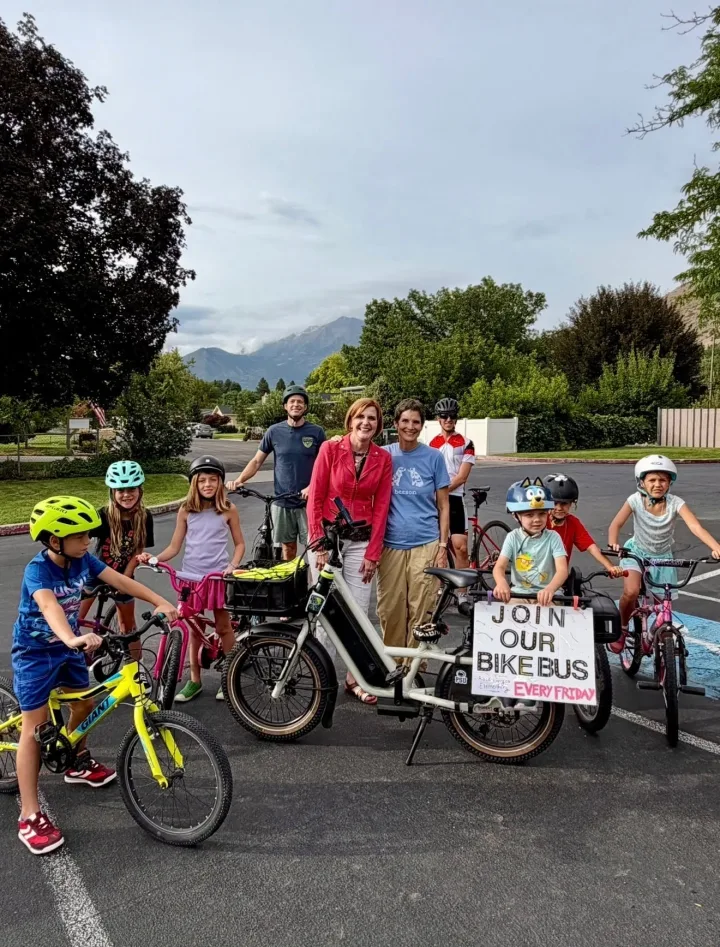
Encourage families to start or join a walking bus. Kids and adults meet at a set time and walk to school together. A bike bus works the same way on bikes. Other families can join along the way. Kids have company, and families can skip the car line. Share the parent organizer flyer with interested families. BikeWalk Provo volunteers will give every parent organizer a starter kit, help them choose a route, and answer questions as they get their group going.
Work with the city on recurring traffic problems
Invite Provo City Traffic Manager Vern Keeslar to a council meeting. Email vkeeslar@provo.org with where and when a problem keeps happening so you can work on a fix together.
Take action to keep no-stopping areas clear at corners, at crossings, and in bike lanes. If drivers keep stopping there, show Vern where it happens. Ask whether cones would help and where they could go without blocking people walking, biking, or rolling. Staff working the car line can set out the cones and pick them up afterward.